Why Brain Health Awareness Means Action to Me
By Jacquelyn Lee
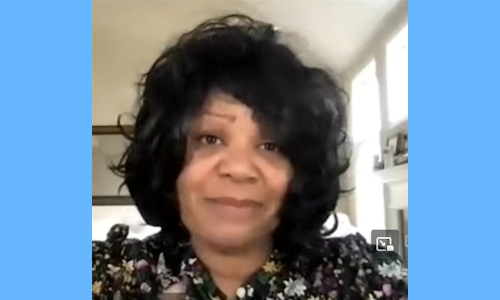
To view Jacquelyn’s story on YouTube, click here.
Alzheimer's has been a part of my life long before I knewits name. I was mostly raised by my grandparents and, as a child, watched olderrelatives forget things, repeat themselves, and behave in ways that didn'tquite make sense to me. No one in my family called it Alzheimer's or dementia.They'd say, “they're getting older” or “a little senile,” and move on. Nothingwas addressed. Nothing was really questioned. There was no furtherconversation.
That early exposure stayed with me through the years: fromSan Diego to Los Angeles, through college, a career at a phone company, andeventually 16 years at the Kentucky Department of Public Health, where I sawfirsthand the big disparities between Whites and non-Whites in this state.
For me, awareness means action. I try to keep my mind and body engaged. I take Pilates classes, work out four times a week, take a Frenchclass, do crossword puzzles. I know that mind and body go hand in hand.
Eventually, Alzheimer's found its way back into my life asmy friends and I got older. Many of my friends are currently caring for agingparents, and I have become part of their support system.
I recall how one friend in California watched her mother hide symptoms for years. Her mother was creative enough to hide a lot of the symptoms until it was too late. By the time things became undeniable, she was overwhelmed and didn't know where to turn. I've sent her information, but I'm in Kentucky and I’m not familiar with the resources in California.
That experience made one thing clear: if we don't ask questions early on, we risk missing the chance to act and slow the progression.
So, I've made a conscious decision to tell my family: If something feels off, I want to get tested. And I want my family to speak up for me, even if I can't. That openness isn't always common in my community, where older generations often avoid these conversations.
Early diagnosis gives families something invaluable: Time.Time to plan. Time to build a support system and create memories before things progress. A late diagnosis means scrambling to catch up.
I've been an advocate for others. I’ve sat in doctor's offices with people too hesitant to advocate for themselves. That's just not something they're accustomed to doing. And while that fear is understandable and real, it shouldn't stop us from seeking answers. Having someone beside you,asking questions and pushing for clarity, can change everything.
To Black and Latino families especially I want to say this:don't be afraid. Don't buy into the taboo. We all deserve to understand what's happening in our bodies and minds. Bring your family in. Build your support system. Speak up.
The sooner you know, the more you can do to not just prepare—but to live fully.
---
Jacquelyn Lee is a member of the AlzInColor Community Advisory Board, past President of the Frankfort/Lexington (KY)Chapter of The Links, Incorporated, a proud member of Alpha Kappa Alpha Sorority, Incorporated and recently retired from the Kentucky State Government as an Informatics Project Manager. For over 20 years, Jacquelyn has been an active servant leader in the Frankfort and Lexington communities.