Why I’m No Longer Afraid to Talk About the “Big A”
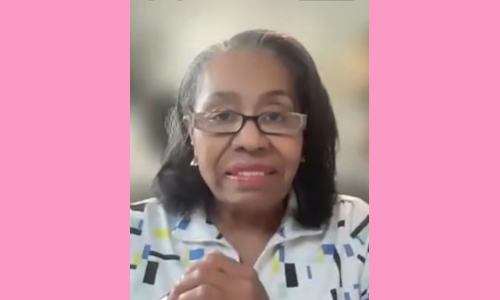
By Cheryl Teare
To view Chery’s story on YouTube, click here.
We know something was off with my mother’s memory for over a decade. But when she went to get it checked out, she came back and told us: “The doctor says I’m fine. He says you all are crazy.” And we let mom leave it at that because we couldn’t put a name on it and we didn’t know how to deal with it.
It was only when our mom died that the doctors confirmed that we weren’t crazy. And neither was she. She had Alzheimer’s. Even though she was already gone, it was devastating because—all that time—we didn’t know because she didn’t want to know.
In many ways, the hesitancy mirrored the silence that once surrounded cancer—the “big C.” There was a time when the word was too heavy to say out loud and a truth too frightening to name. For my mother, a combination of limited access to information, deep fear, denial, and the stigma that confuses having Alzheimer’s with being “crazy” all stood between her and the help she needed. To accept a diagnosis was, in her mind, to become that image.
My mother’s experience is not unique. As President of the Washington (DC) Chapter of The Links, Incorporated—a Black women-led volunteer service organization—I see different versions of my family’s story playing out throughout the Black community. Whether it’s someone’s parent, spouse, friend, or they have the disease themselves—what strikes me isn't just the prevalence, but the silence surrounding it.
The reluctance in my community goes beyond fear. It comes from centuries of mistrust in a medical system that has largely failed Black Americans. These days, it looks like limited access to quality care, doctors stretched thin, insurance companies reluctant to pay, and communities where brain health usually comes last and is mistakenly treated as separate from physical wellbeing.
Looking back at my mother’s experience, what stays with me is not just what she lost, but what might have been possible with early prevention. Even simple habits like doing puzzles or crosswords could have made a difference. Research now connects that kind of everyday practice to cognitive resilience.
But I channel that pain and regret into action, telling anyone who will listen to get a baseline and go to a doctor. I make it my goal each day to raise the volume in my own community. My girlfriends and I share articles, exchange information, and show up for one another in ways that my mother’s generation didn’t.
I believe the solutions don’t only live in clinics and conference rooms. They also live in spaces where people already gather and already trust each other like churches, nail salons, or even a group chat between friends. The openness I’ve tried to model with my own children, where forgetfulness is named rather than avoided, makes some people uncomfortable at first. But then it opens a door for people to start asking questions and share their own experiences.
That’s what makes AlzInColor different. It doesn’t ask people to walk into a doctor’s office already knowing the language or to already be past the fear. It meets them where they are with stories that actually reflect their own. A friend once told me to never call it “Alzheimer’s” because people will shut you down before you can even finish your sentence. We talk about brain health, and what we can protect rather than what we might lose. AlzInColor not only makes the conversation possible, but necessary and accessible in a way that is powerful enough to change what happens next.
---
Cheryl Teare is the current President of the Washington (DC) Chapter of The Links, Incorporated. She is a licensed attorney and serves as a mediator and/or arbitrator in cases involving labor and employment in the federal sector, public sector, healthcare, and all levels of education.