How I Learned to Never Take My Brain Health for Granted
By Jeanette Contreras
To view Jeanette's story on YouTube, click here.
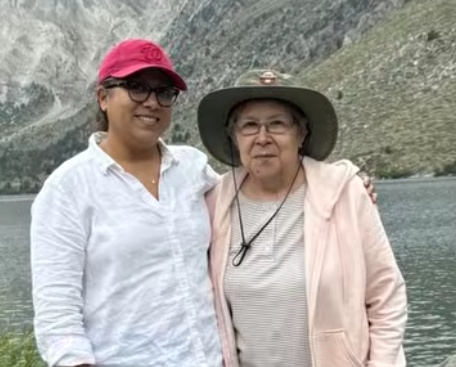
Alzheimer’s sometimes reveals itself in subtle ways. For my grandmother it was tortillas tucked inside a drawer and ketchup left in the bathroom. She was living alone then. We weren’t sure what to make of it at first, and I certainly didn’t know as a 14-year-old girl. Eventually, she moved into my parents’ house, into my brother’s old room, and stayed for six years while the disease quietly did what it does.
For my family, a facility wasn’t the first option. We always knew someone in our family would take care of her. That’s how it works in many Latino families. But when the disease progresses as far as it did, you reach a point where home is no longer enough. By the time she moved into a facility, my grandmother had stopped eating. She had stopped sleeping.
Caregiving was woven into the fabric of our family. I watched my mother take care of my grandmother, her mother-in-law. As my mother aged, she also cared for my father, who was becoming deaf, losing his eyesight, managing diabetes, and eventually battling lung disease. In the last year of his life, he developed severe dementia. When the brain becomes isolated from the world, cognitive decline can follow. He also had so many conditions that made him more susceptible.
My mom had it the hardest, but it was rough for all of us. Navigating medical coverage, paperwork, legal advice, looking for resources—the things you don’t really think about when you’re in the middle of it.
Now that my family is on the other side of it, we don’t take our brain health for granted. My siblings and I keep a close eye on my now 81-year-old mother and each other because we know Alzheimer’s runs in our family. We do what we can to stay healthy, to catch anything early, and to be ready in a way that we weren’t before.
We need to talk about family history—that's how we begin to understand our own risk. Create a long-term care plan, get screened, bring it up at the dinner table, at family gatherings, in everyday moments where it doesn’t feel like such a heavy thing.
I encourage every family to have these conversations, but I also understand why it’s hard, especially in the Latino community. Alzheimer’s and dementia still carry stigma. They get framed as mental failings, as weakness. And in a culture where respecting your elders is everything, telling someone they need help can feel like an act of disrespect. Combine that with the deeply ingrained habit of not going to the doctor until something is already wrong.
Prevention isn’t part of our routine, but we can change that.
If we had the knowledge and the resources available today 20 years ago, I think that my grandmother's symptoms would have been diagnosed sooner. She would have been able to prevent the disease progression. It would have been delayed.
So, let’s get ahead of the disease. I’m going to make sure I’m as prepared as I can be and prepare my family as much as I can.
---
Jeanette Contreras is the founding Executive Director of the Organization for Latino Health Advocacy (OLHA), a national nonprofit organization dedicated to ensuring Latinos and other medically underserved populations have equitable access to the resources, knowledge, and support needed for healthy, fulfilling lives.